The First Lith Print
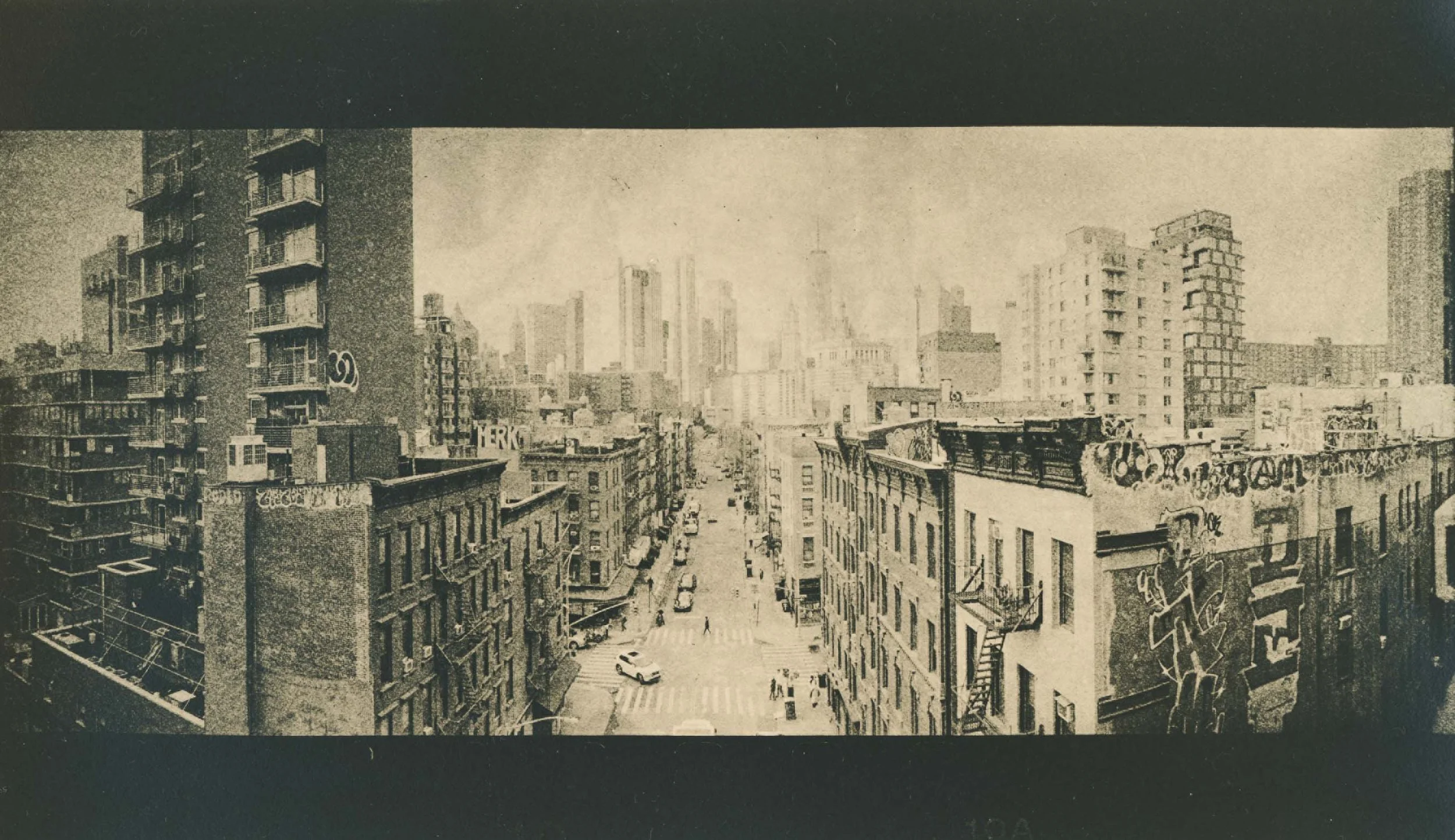
Printed on Kodak Medalist paper
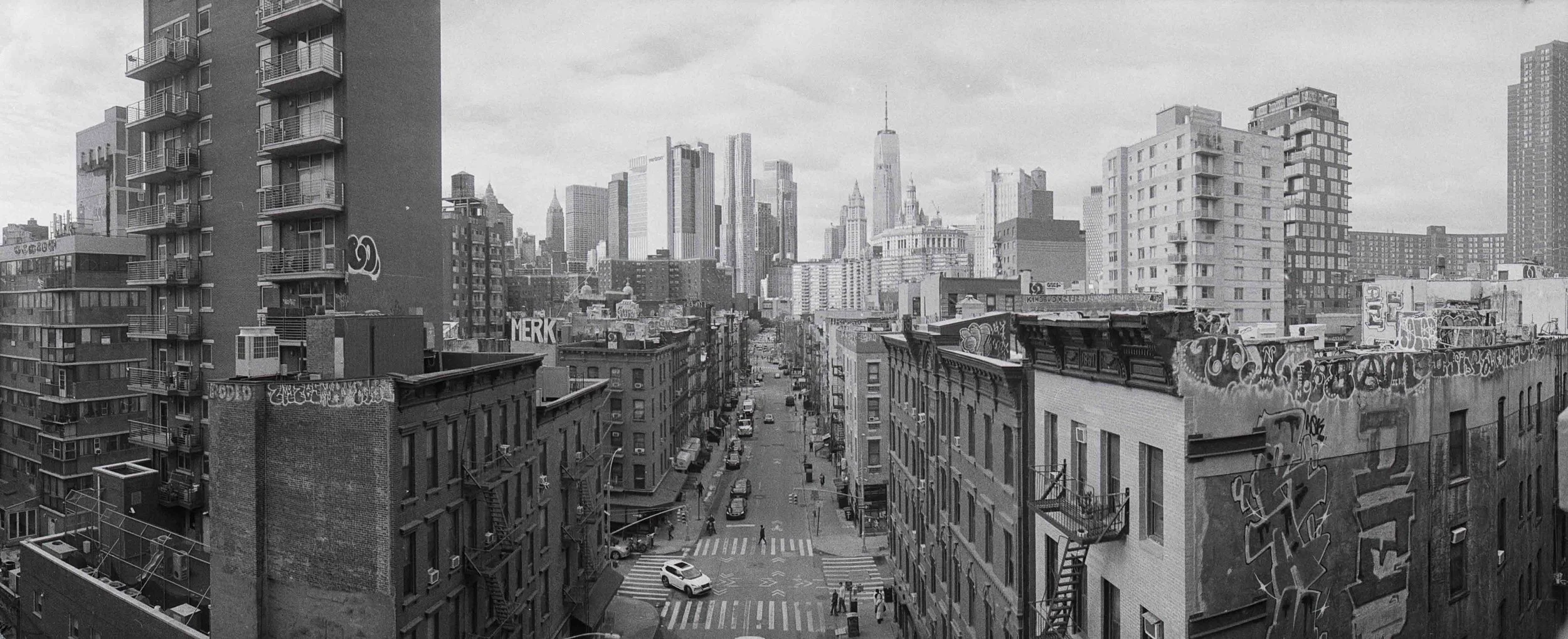
Original scanned negative
I made my first proper lith print this week, and it felt like discovering photography all over again.
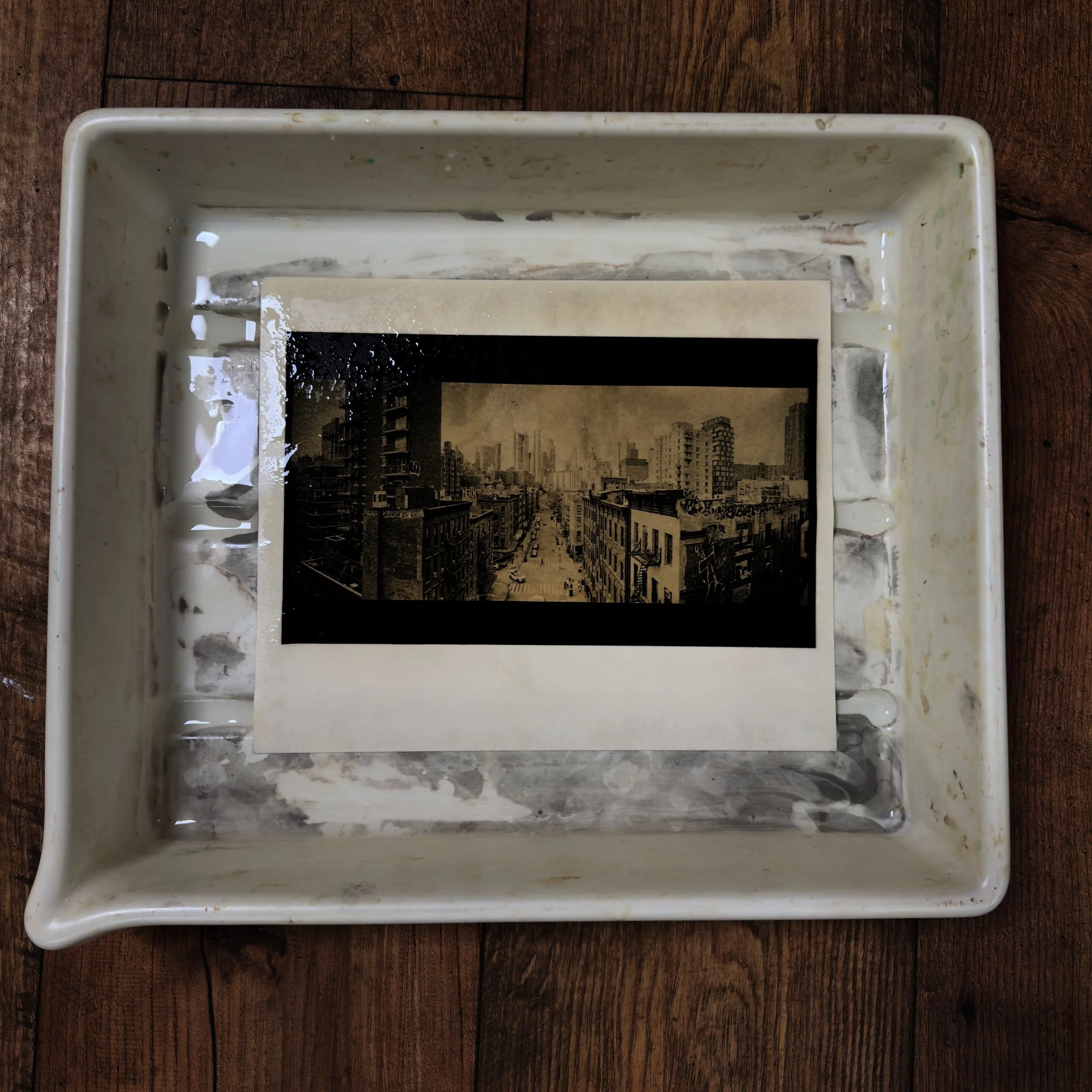
Straight out of the wash tank
I’ve spent years around film, negatives, contact sheets and darkrooms, printing straightforward silver gelatin based prints. Lith printing is relatively new to me and it has a different temperament altogether. It is slower, stranger and far less obedient. You stand over the tray waiting for something to happen, and then suddenly the shadows begin to gather speed. The image seems to lurch into life.
Lith printers call this infectious development.
It’s a wonderful thing to watch.
Watching the Image Appear
This print was made from a panoramic negative (see image above), on Kodak Medalist paper dated from the late 1970 early 80s. I pulled it from the developer at that slightly nervous point where it felt as though one more moment might ruin it, and that tension seems to be part of the process. Lith printing isn’t really about precision. It’s about judgment, timing and accepting that the chemistry will have its say.
Standing over the tray, watching the blacks creep into the image, I realised that lith printing feels less like conventional photography and more like printmaking. The grain grows, the shadows deepen, and the tones settle into a warm, slightly earthy palette.
The print begins to feel like an object rather than simply an image.
Why Lith?
Part of the appeal, I think, is that lith printing resists perfection.
Modern photography is wonderfully precise. Cameras and software can render an image with extraordinary accuracy. But lith printing introduces a degree of chance back into the process.
The chemistry matters.
The temperature matters.
The age of the developer matters.
The existence and quality of ‘old brown’ matters.
Even the same negative printed twice will rarely look exactly the same.
There’s something refreshing about that.
A Panoramic Negative
The photograph itself was made with a rented Widelux F7 panoramic camera, a camera I’ve recently begun experimenting with. It’s taken from the Manhattan Bridge looking south down a street in the lower east side towards the One World Trade Center in the distance.
Panoramic cameras record the world in a different way. The rotating lens sweeps across the scene, stretching the moment slightly across time. The resulting negatives feel almost cinematic — long horizontal slices of the world.
The panoramic negative felt right for this treatment, where atmosphere and texture often matter more than technical perfection. Lith seems to suit that instability. It welcomes atmosphere, distortion and mood.
This particular frame felt like a good place to start.
Back in the Darkroom
There’s a particular moment in the darkroom when a photograph begins to appear in the tray and you realise you’ve never seen that image in quite this way before.
Lith printing amplifies that feeling.
The process slows everything down. It demands attention and patience, and occasionally it rewards you with something that feels slightly mysterious.
That first lith print felt a bit like that.
A small discovery in a tray of developer.
And hopefully the start of a longer journey.
This is only a first step. I’ve got other papers to test, including some revered Agfa Record Rapid, and I’m beginning to sense that this may grow into a body of work rather than a one-off experiment. For now, though, I’m just pleased to have seen that first image come up in the tray and realise there is still mystery left in photography.
Darkroom Notes
Camera: Widelux F7 panoramic camera
Film: Kodak Tri-X - Black and white 35mm
Paper: Kodak Medalist fibre based baryta
Process: Lith printing
Developer: Highly diluted lith developer
Location: Negative Thinking darkroom, Bristol
Print status: First experiment, straight from the wash tank
Some images only really arrive when they meet the paper.